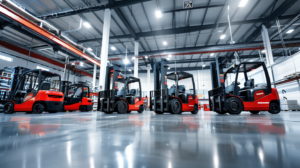
1. What Is a Rugged (Rough) Terrain Forklift, Really?
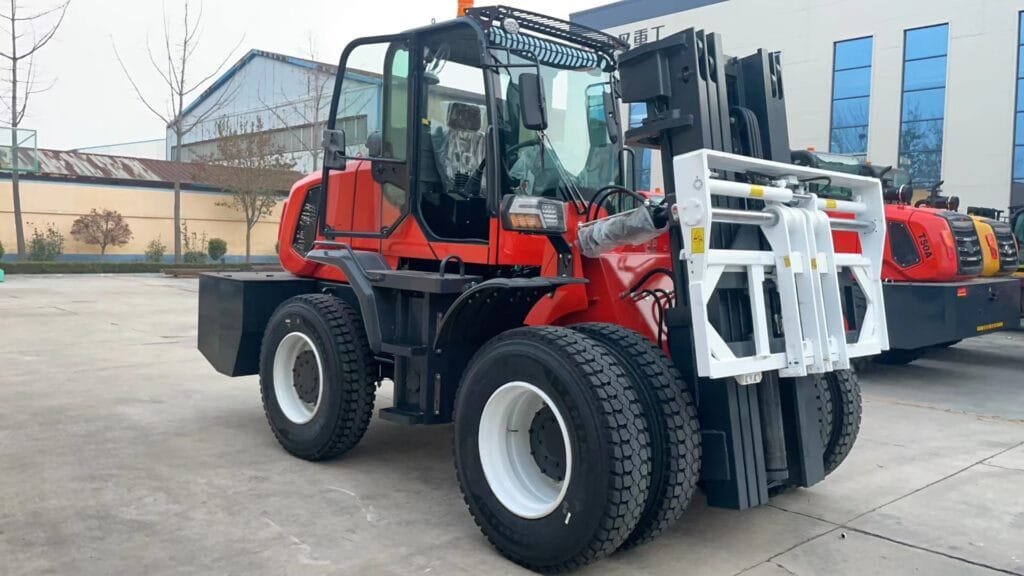
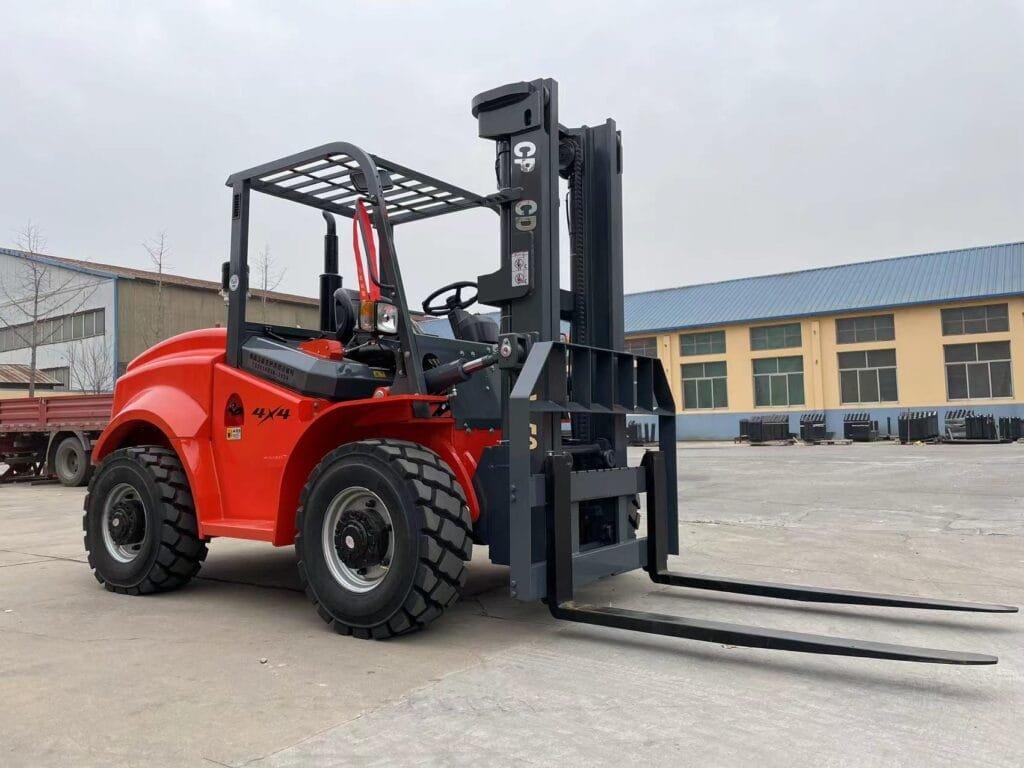
A rugged terrain forklift—also called a rough terrain forklift—is built for places where normal forklifts simply give up.
Think:
- Muddy construction sites
- Gravel yards
- Farms and orchards
- Lumber yards
- Remote infrastructure projects
These machines usually have:
- Large pneumatic tires
- High ground clearance
- Strong frames
- Simple but powerful drivetrains
They are not designed for polished factory floors. They are designed to keep moving when the ground is uneven, wet, or soft.
If the jobsite looks more like a field than a warehouse, this is the right category of machine.
2. Typical Jobsites That Need Rugged Terrain Forklifts
From factory-side experience, these are the most common users:
- Construction contractors moving pallets of bricks, cement, steel
- Agricultural users handling feed, hay, fertilizer
- Rental companies supplying short-term machines to builders
- Importers & distributors selling into developing or rural markets
If the forklift must work outdoors most of the time, rugged terrain is not optional—it’s mandatory.
3. Why Buyers Are Looking at Chinese Rugged Terrain Forklifts
Ten years ago, buyers rarely asked about Chinese rough terrain forklifts.
Today, they ask all the time.
Why?
Because:
- Western brands are expensive
- Delivery times are long
- Rental and resale margins are getting tighter
Buyers are under pressure to lower purchase cost without killing reliability.
China stepped in to fill that gap.
4. The Real Advantages (Pros) of Chinese Rugged Terrain Forklifts
Let’s start with what Chinese manufacturers actually do well.
4.1 Price Advantage Is Real
This is the biggest reason buyers look at China.
A Chinese rugged terrain forklift often costs:
- 30–50% less than European or Japanese brands
That price difference can mean:
- Faster ROI for rental companies
- Higher resale margins for importers
- Lower entry cost for small contractors
And yes—the price gap is still real even after shipping.
4.2 Simple, Proven Mechanical Designs
Most Chinese rough terrain forklifts are:
- Mechanical, not over-electronic
- Easy to understand
- Easy to repair
For outdoor machines, that simplicity is a strength.
Less electronics =
- Fewer sensor failures
- Easier field repairs
- Less dependency on branded software
On rough jobsites, simple often wins.
4.3 Strong Customization Ability
Chinese factories are very flexible.
Buyers can usually request:
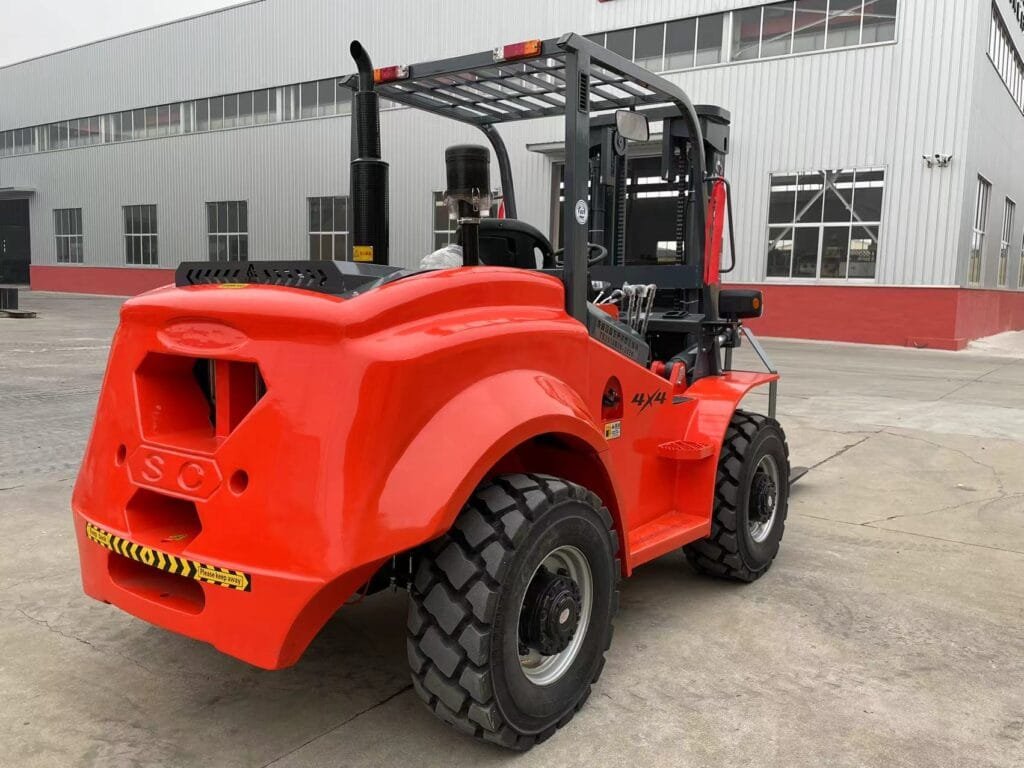
- Custom paint and branding
- Different tire patterns
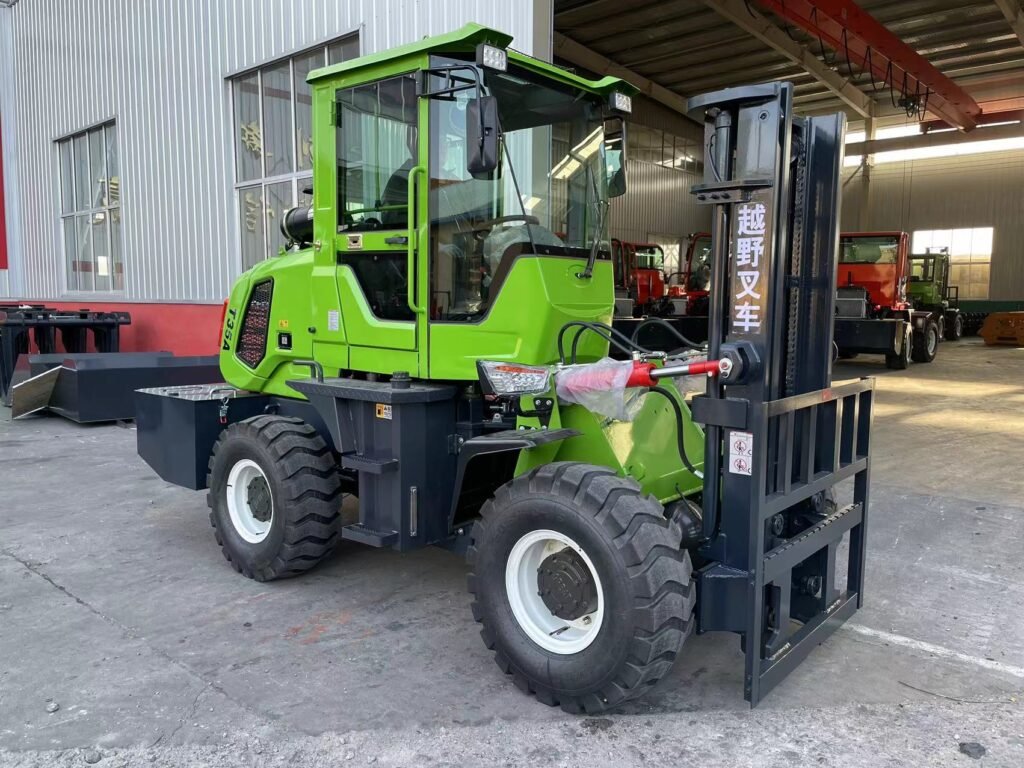
- Optional cabins or canopies
- Engine brand choices
For distributors doing private labeling, this is a big advantage.
4.4 Faster Production for Bulk Orders
For B2B buyers:
- Production cycles are usually shorter
- Factories are used to container orders
- OEM/ODM is normal, not special
This helps importers catch seasonal demand.
5. The Real Disadvantages (Cons) You Must Know
Now the part many suppliers avoid talking about.
5.1 Quality Varies Wildly Between Factories
This is the biggest risk.
Two forklifts may look identical in photos but be completely different in:
- Steel thickness
- Welding quality
- Hose routing
- Bearing selection
Without factory inspection, it’s easy to buy a machine that looks rugged but isn’t.
5.2 Component Choices Matter More Than Country
Problems often come from:
- Low-grade hydraulic pumps
- Cheap seals
- Poor electrical connectors
These don’t fail on day one—but fail after 6–12 months.
That’s when warranty headaches start.
5.3 After-Sales Support Depends on Preparation
Chinese factories don’t have service vans in your country.
If the buyer does not:
- Stock spare parts
- Understand basic repairs
- Train local technicians
Downtime becomes expensive.
5.4 Certification Risks Are Real
Some suppliers:
- Use outdated certificates
- Provide fake documents
- Don’t match machine specs to certification
This can cause customs delays—or worse.
6. Build Quality: Where the Differences Really Are
From factory floor inspections, these areas separate good from bad machines:
Frame & Welding
- Thick steel plates matter more than paint
- Continuous welds beat spot welds
- Reinforced stress points extend life
Axles & Tires
- Cheap axles crack under load
- Quality tires prevent sidewall failures
Mast & Chains
- Smooth lifting means better machining
- Poor chains stretch quickly
These details don’t show in brochures—but show on jobsites.
7. Engine, Hydraulics, and Key Components Explained Simply
No jargon—just practical thinking.
Engines
Good Chinese forklifts often use:
- Licensed diesel engines
- Well-known regional engine brands
The key is parts availability, not brand prestige.
Hydraulics
Hydraulics are the heart of the machine.
Look for:
- Clean hose routing
- Reputable pump suppliers
- Proper pressure testing
Cheap hydraulics feel okay at first, then lose power slowly.
8. Certifications, Compliance, and Export Risks
This is critical for Europe, North America, and Australia.
Buyers should always verify:
- CE or equivalent compliance
- Emission standards
- Serial numbers matching documents
A reliable factory will:
- Provide original certificates
- Allow third-party inspection
- Match configuration exactly
Skipping this step is gambling.
9. Cost vs. Lifetime Value: The Honest Math
Cheap machines are expensive if they stop working.
The smart way to compare:
- Purchase price
- Expected working hours
- Repair cost
- Downtime loss
A slightly higher-priced Chinese forklift with better components usually wins long-term.
10. Who Should Buy a Chinese Rugged Terrain Forklift
Chinese rugged terrain forklifts make sense for:
- Importers & distributors with service ability
- Rental companies managing maintenance
- Contractors who value cost efficiency
- Agricultural users needing simple, tough machines
Especially when margins matter.
11. Who Should Think Twice
They may not be ideal for:
- Buyers wanting zero involvement after delivery
- Jobs requiring dealer-backed nationwide service
- Operators unfamiliar with basic maintenance
Know your situation honestly.
12. How to Reduce Risk When Buying from China
This is how experienced buyers avoid mistakes:
- Visit or inspect the factory
- Demand real certificates
- Specify components clearly
- Order spare parts with the machine
- Test before shipping
This turns risk into control.
13. Where Brands Like Nicosail Fit In
Some Chinese manufacturers focus on:
- Stable configurations
- Export compliance
- Long-term cooperation
A brand like Nicosail often appeals to buyers who want:
- Factory-level support
- Customization without chaos
- Machines designed for export markets
Not the cheapest—but more predictable.
14. FAQs Buyers Always Ask
Q1: Are Chinese rugged terrain forklifts reliable?
They can be—if built by the right factory with the right components.
Q2: How long do they usually last?
With proper maintenance, many run thousands of hours reliably.
Q3: Are spare parts hard to get?
Not if parts are ordered upfront or standardized components are used.
Q4: Are they good for rental fleets?
Yes, especially due to lower upfront cost and simple mechanics.
Q5: What’s the biggest mistake buyers make?
Buying based on photos and price only.
15. Final Summary: Is It the Right Choice for You?
A Chinese rugged terrain forklift is not automatically good or bad.
It is:
- A cost-effective tool
- A smart choice when sourced carefully
- A risk when bought blindly
For buyers who understand their jobsite, service ability, and real needs, it can be an excellent investment.
The key is not asking “Is it Chinese?”
The key question is “Is it built right for the job?”
When that question is answered honestly, the decision becomes clear.