Introduction: Why Electric Forklifts Are Taking Over
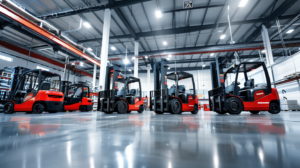
Walk into any modern warehouse in Europe or North America, and it’s clear—electric forklifts are replacing diesel and gas machines fast.
Why? Simple:
- Lower running cost
- Quiet operation
- Zero emissions indoors
- Easier maintenance
But here’s the problem:
Most buyers focus only on price and lifting capacity, and ignore the three things that actually decide whether the machine works smoothly for years:
- Battery type
- Charger system
- Duty cycle matching
That’s where many expensive mistakes happen.
Understanding Battery Types
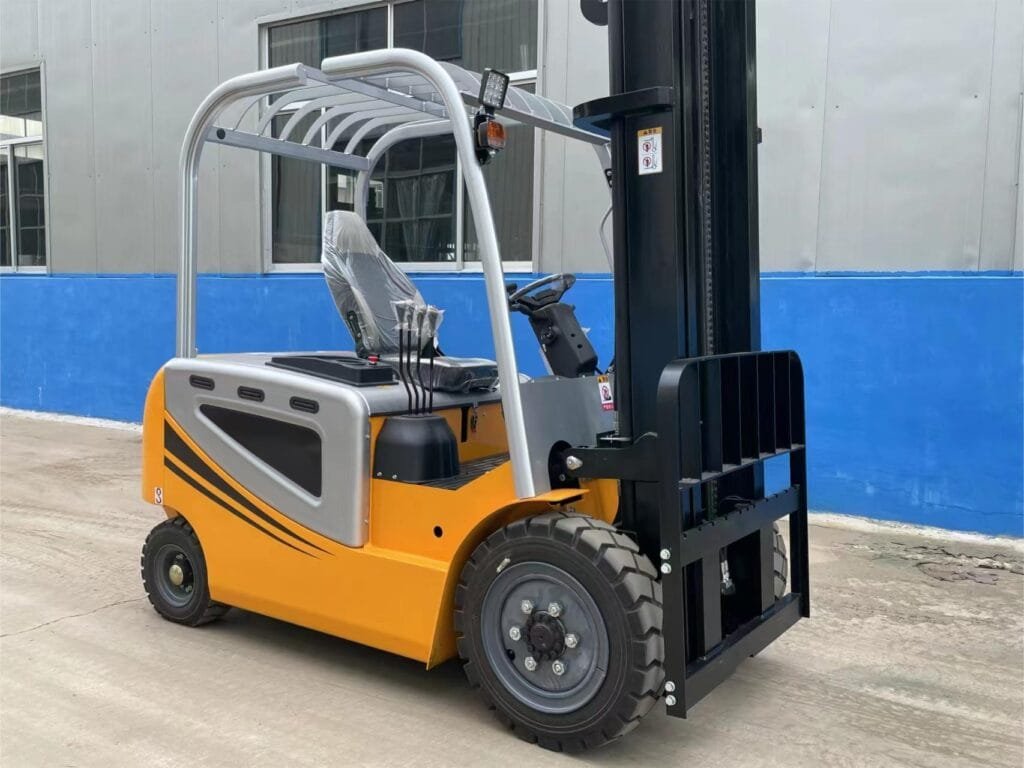
1. Lead-Acid Batteries (Traditional Choice)
4
This is the “old-school” option. Still widely used, especially where budget is tight.
Pros:
- Lower upfront cost
- Mature technology (easy to source replacements)
- Good for single-shift operations
Cons:
- Needs regular watering and maintenance
- Charging takes 8–10 hours
- Requires cooling time before reuse
- Heavy and bulky
👉 Real factory feedback:
In many export cases, over 30% of lead-acid issues come from improper maintenance, not the battery itself. Operators forget watering or overcharge it.
👉 Best for:
- Rental companies
- Light warehouse use
- Buyers with strict budget limits
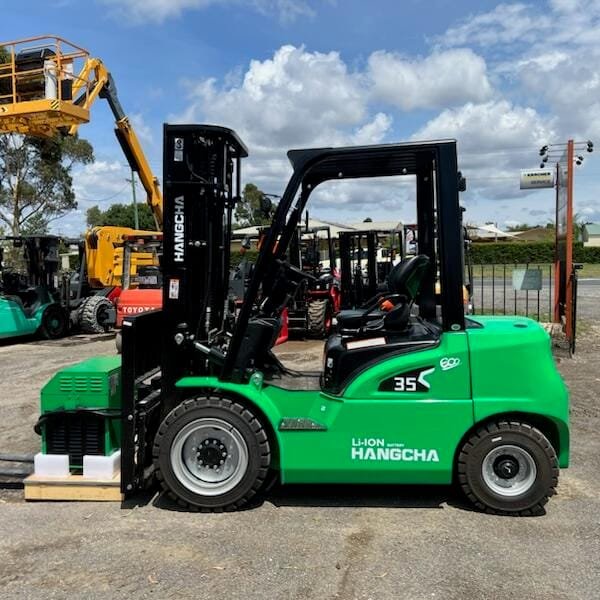
2. Lithium-Ion Batteries (Modern Solution)
4
This is where the market is heading fast.
Pros:
- Fast charging (1–2 hours)
- Opportunity charging (charge anytime)
- No maintenance
- Longer lifespan (2–3x lead-acid)
Cons:
- Higher upfront cost
- Requires proper BMS (battery management system)
- Not all suppliers use high-quality cells
👉 Real insight from factory floor:
Machines with low-quality lithium cells fail not in year 1—but suddenly in year 2 or 3, which creates big downtime losses.
👉 Best for:
- Multi-shift warehouses
- High-efficiency logistics
- Buyers who value uptime over initial price
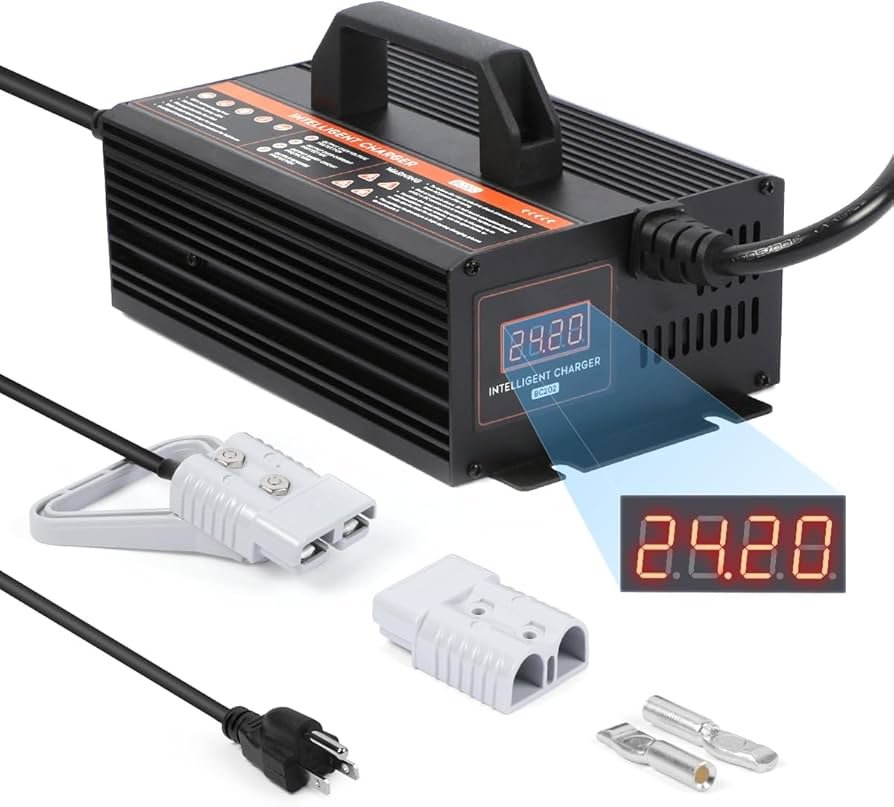
Chargers: The Hidden Factor Most Buyers Ignore
4
Here’s something many buyers don’t realize:
Even the best battery can fail early if the charger is wrong.
Two Main Types:
1. External Chargers
- More powerful
- Faster charging
- Common in large warehouses
2. Onboard Chargers
- Built into the forklift
- Convenient
- Usually slower
Key Things to Check:
- Is it matched to battery type? (very important)
- Charging time vs your working hours
- Voltage stability (important in developing countries)
👉 Real case:
A European client had repeated battery failures. The issue?
Unstable voltage + cheap charger = battery damage in 6 months.
What Is Duty Cycle (And Why It Matters More Than Price)
This is where most buying decisions go wrong.
Simple explanation:
Duty cycle =
How many hours per day the forklift works + how heavy the workload is
Example:
| Scenario | Real Situation |
|---|---|
| Light Duty | 4–5 hours/day, occasional lifting |
| Medium Duty | 6–8 hours/day, steady work |
| Heavy Duty | 10–16 hours/day, continuous operation |
Why It Matters
If you mismatch duty cycle:
- Battery drains too fast
- Overheating issues
- Short lifespan
- Productivity loss
👉 Factory data shows:
Over 40% of early forklift failures are due to wrong duty cycle matching, not quality problems.
Matching Forklift to Real Work Scenarios
Scenario 1: Small Warehouse / Farm
- Use: 3–5 hours/day
- Recommendation:
- Lead-acid battery
- Standard charger
✔ Lower cost, good enough performance
Scenario 2: Logistics Center
- Use: 8–12 hours/day
- Recommendation:
- Lithium battery
- Fast charger
✔ Keeps operation running without downtime
Scenario 3: 24/7 Operation
- Use: Continuous shifts
- Recommendation:
- Lithium battery ONLY
- Opportunity charging setup
✔ No battery swapping needed
Common Mistakes Buyers Make
Mistake 1: Choosing the cheapest battery
Cheap now = expensive later
Mistake 2: Ignoring charging infrastructure
No proper charging plan = downtime
Mistake 3: Overestimating usage
Buying too big = wasted money
Mistake 4: Underestimating usage
Buying too small = constant breakdown
Factory-Level Insights (What Really Fails First)
From 30 years of manufacturing experience, here’s what actually causes problems:
- Battery, not motor, fails first
- Poor chargers damage good batteries
- Wiring and connectors often overlooked
- Heat management is critical in hot countries
👉 Important truth:
Most “quality complaints” are actually configuration mistakes.
Why Many Buyers Are Turning to Brands Like Nicosail
When buyers choose a supplier today, they don’t just look at price anymore.
They look for:
- Stable battery supply
- Matching charger systems
- Real technical support
- Custom configuration
Brands like Nicosail are becoming popular because they focus on:
- Matching machine to real usage scenarios
- Providing both lithium and lead-acid options
- Export experience to Europe, North America, Australia
Not flashy—but practical and reliable.
Final Checklist Before You Place an Order
Before buying, make sure these are clear:
✔ How many hours per day will it run?
✔ Indoor or outdoor use?
✔ Charging time available?
✔ Power supply stability?
✔ Budget vs long-term cost?
FAQ
1. Is lithium battery always better than lead-acid?
Not always. For light use, lead-acid is more cost-effective. For heavy use, lithium wins.
2. How long does a forklift battery last?
- Lead-acid: 3–5 years
- Lithium: 5–8 years
Depends heavily on usage and charging habits.
3. Can I upgrade from lead-acid to lithium later?
Yes, but charger and system must also be upgraded.
4. How do I know if my duty cycle is heavy or light?
Just track:
- Daily working hours
- Load weight
- Break time
That gives a clear picture.
5. What is the biggest hidden cost?
Battery replacement and downtime—not the forklift itself.
Conclusion
Choosing a Chinese electric forklift is not complicated—but it must be done correctly.
Focus on three core things:
- The right battery type
- A properly matched charger
- Realistic duty cycle
Get these right, and the machine will run smoothly for years.
Get them wrong, and even the best forklift will feel like a bad investment.
For buyers, distributors, and contractors, the smartest move is simple:
Don’t just buy a forklift—match a system to your real work.