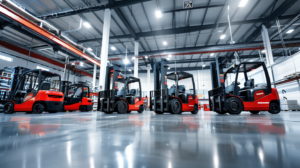
Introduction to Rough Terrain Forklifts
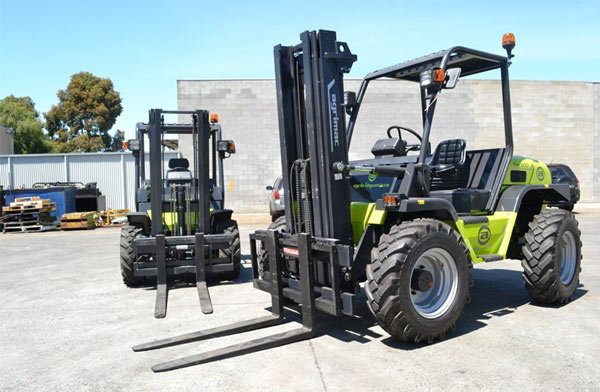
Rough terrain forklifts are the unsung heroes of construction sites, agricultural fields, mining operations, and logistics yards. Unlike traditional forklifts designed for smooth warehouse floors, these rugged machines thrive on uneven ground, gravel, mud, and steep slopes. They are built to lift heavy loads where ordinary equipment would struggle.
Over the past two decades, the global forklift industry has transformed into a highly competitive field, with manufacturers from the United States, Europe, Japan, and increasingly, China, vying for dominance. This article explores how China’s rough terrain forklifts compare to global competitors, highlighting performance, cost, innovation, and future trends.
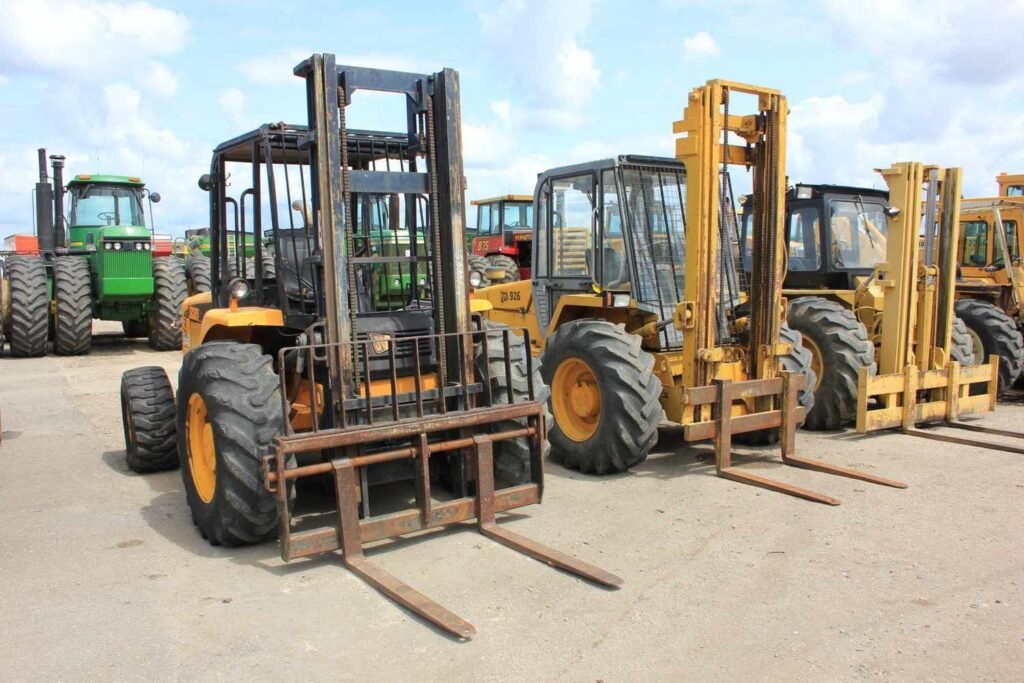
Global Market Overview of Rough Terrain Forklifts
The global forklift market is valued at billions annually, and rough terrain forklifts make up a significant share due to their essential role in industries like construction and agriculture.
- US and European Leaders: Brands such as JCB, Manitou, and Caterpillar dominate the premium market, offering machines renowned for durability and advanced technology.
- Japanese Precision: Toyota and Komatsu are highly respected for reliability, ergonomics, and strict quality control.
- China’s Emergence: Over the last 15 years, Chinese manufacturers have rapidly grown in both domestic and export markets, driven by competitive pricing and improvements in product quality.
Technological Innovations in Rough Terrain Forklifts
Forklift technology is evolving fast:
- Engines & Efficiency: Western brands often lead in low-emission diesel engines, but Chinese manufacturers are catching up with hybrid and electric models.
- Safety & Comfort: Enclosed cabs, advanced braking systems, and ergonomic controls are now industry standards.
- Digital Features: Smart sensors, telematics, and remote monitoring enhance fleet management, an area where global leaders still have the edge.
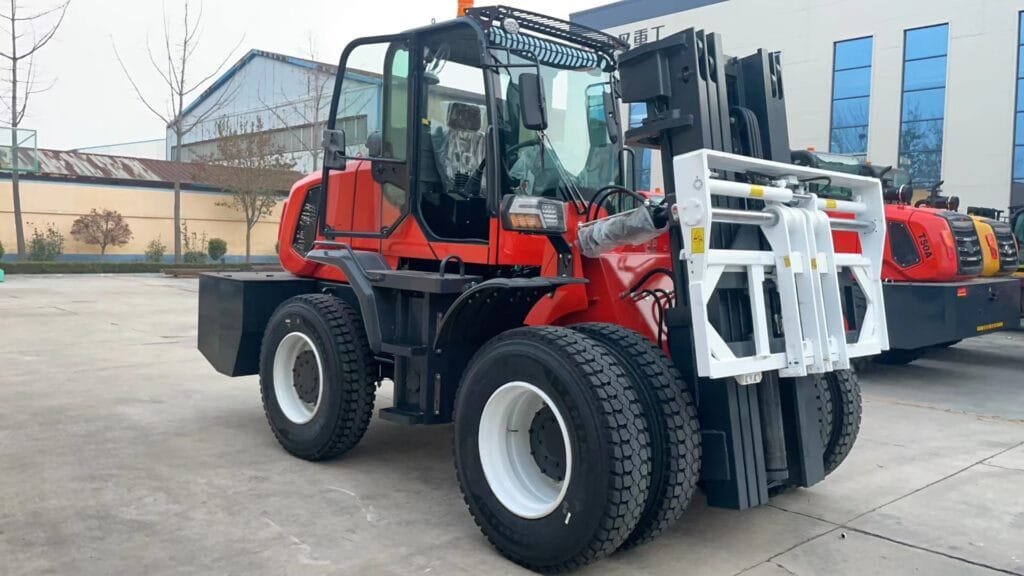
Comparing China’s Rough Terrain Forklifts with Global Brands
- Performance Metrics:
Chinese forklifts have narrowed the gap in lifting capacity and maneuverability. While premium brands may still outperform in extreme conditions, China’s models are sufficient for most industrial needs. - Durability:
Historically, Chinese forklifts were considered less durable, but improvements in steel quality and hydraulic systems have strengthened their reputation. - Compliance:
Meeting international standards (such as CE certification in Europe) has become a priority for Chinese companies, with many now achieving compliance to expand exports.
Cost and Value Proposition
One of China’s greatest strengths lies in pricing.
- Price Comparison: A Chinese rough terrain forklift often costs 30–40% less than an equivalent Western model.
- Total Cost of Ownership: Maintenance costs are improving as Chinese manufacturers establish better global service networks.
- Financing & Support: Global players may offer stronger after-sales financing, but Chinese brands are quickly adopting similar strategies.
Spotlight on Chinese Brands
China is home to dozens of forklift manufacturers, but a few stand out for their innovation and global outreach.
- Nicosail: Known for producing cost-effective forklifts tailored to rough environments, Nicosail represents China’s push toward reliability and adaptability. Customers often highlight the brand’s balance of affordability and practical performance.
- Other Brands: Giants like Hangcha and Heli also play a big role, expanding into European and American markets.
By offering rugged machines at competitive prices, Chinese brands are steadily building credibility worldwide.
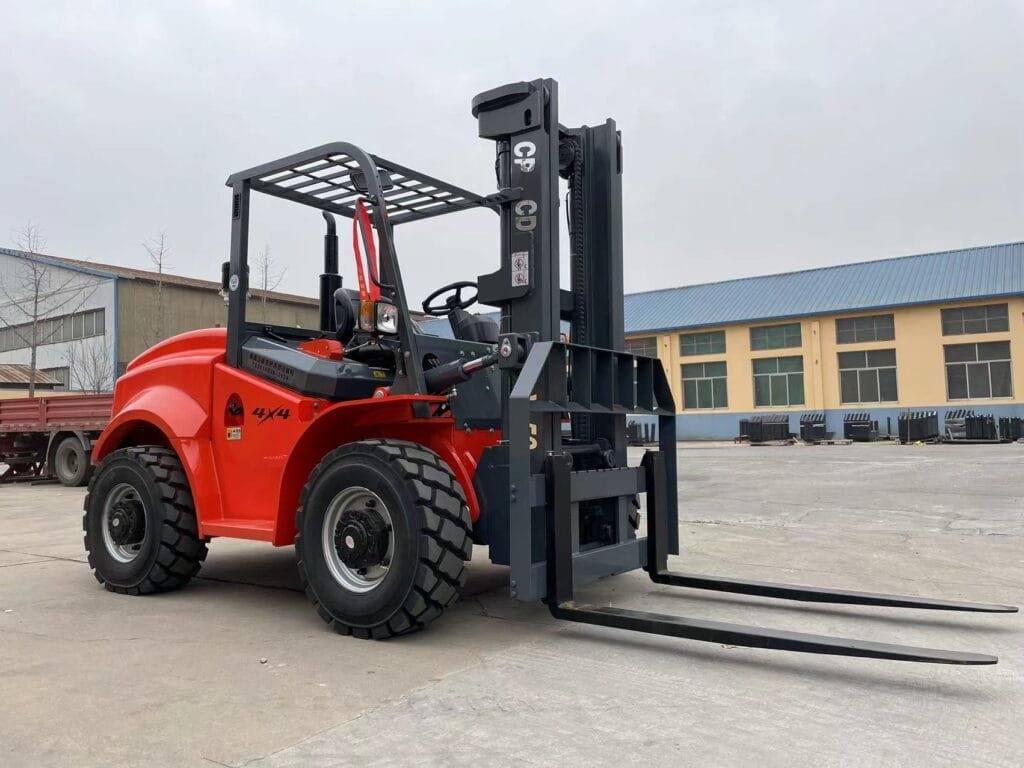
Strengths of Chinese Rough Terrain Forklifts
- Competitive Pricing: Their affordability makes them especially attractive to small and medium enterprises.
- Quality Improvements: Investments in R&D have reduced the performance gap with global leaders.
- Export Growth: Chinese forklifts are now found in Africa, Southeast Asia, South America, and even parts of Europe.
Challenges Faced by Chinese Manufacturers
Despite progress, hurdles remain:
- Lingering perception of lower quality compared to Western brands.
- Distribution gaps in after-sales support and spare parts availability.
- Regulatory barriers in developed markets, which can delay entry or raise costs.
How Global Competitors Maintain Their Edge
US, European, and Japanese brands still hold advantages in:
- Innovation: Proprietary engine designs, patented hydraulics, and superior ergonomics.
- Service Networks: Well-established channels for parts and maintenance.
- Customer Trust: Long-standing reputations for reliability keep customers loyal.
Future Trends in the Rough Terrain Forklift Industry
The future of forklifts is shaped by three megatrends:
- Electrification: Demand for electric and hybrid rough terrain forklifts is growing.
- Automation: Self-driving forklifts are being tested at construction sites.
- Sustainability: Green materials and eco-friendly engines are set to become standard.
Chinese brands like Nicosail are well-positioned to ride these trends, thanks to flexible production capabilities and lower development costs compared to established players.
FAQs on Rough Terrain Forklifts
Q1. What makes rough terrain forklifts different from standard forklifts?
They are designed with heavy-duty tires, stronger engines, and stability systems to handle uneven, outdoor surfaces.
Q2. How do Chinese forklifts compare in durability to Western brands?
While global leaders still lead in extreme durability, Chinese brands like Nicosail have made significant strides in reliability.
Q3. Are spare parts for Chinese forklifts readily available?
Yes, though availability varies by region. More manufacturers are expanding global service centers.
Q4. What industries benefit most from rough terrain forklifts?
Construction, agriculture, mining, forestry, and logistics operations.
Q5. Is it cost-effective to buy a Chinese forklift for long-term use?
For many SMEs, yes. Lower upfront costs and improving quality make them attractive investments.
Q6. Which Chinese brands are gaining recognition globally?
Hangcha, Heli, and Nicosail are emerging as globally recognized players.
Conclusion: The Evolving Global Role of China’s Rough Terrain Forklifts
China’s rough terrain forklifts have come a long way. Once dismissed as lower-quality alternatives, they are now competitive in performance, compliant with global standards, and increasingly trusted by international buyers. Brands like Nicosail illustrate how Chinese manufacturers are striking the right balance between affordability and reliability, making them appealing options for businesses worldwide.
While global giants continue to set the pace in innovation and brand strength, the rapid rise of China’s forklift industry signals a more balanced future for the global market. As sustainability, automation, and electrification reshape the industry, Chinese brands are likely to play an even larger role in the next decade.